Two Proteins, One Process
Both partially defatted instead of isolated. The difference lies elsewhere.
What's in the Can – and What's Not
No isolate, no flavour, no sweetener, no filler. Both powders have exactly one line in the ingredient list.
Ingredient per can
1
Protein Pumpkin Seed
65%
Hemp Protein
50%
Organic from Austria
100%
Pumpkin Seed and Hemp in Direct Comparison
Both powders are produced using the same method. They differ in raw material, nutritional profile, and taste.
Both are partially de-oiled natural products from the same process. The choice is a matter of taste and application, not quality.

Partial discharge instead of isolated
Most protein powders on the shelf are isolates. The raw material is technically broken down, the protein is extracted and concentrated to 80 to 90 percent. Everything else – minerals, fiber, residual fats – remains in the process.
Our two powders are made differently. The kernels or seeds are mechanically pressed to extract the oil. What remains is the press cake: the protein of the seed and everything that was naturally included. This press cake is ground – without roasting, without refining, without additional heat treatment. The powder is ready.
Honestly, an isolate is not bad because of this: If you want the maximum amount of protein per gram with as few calories as possible, you are better off with it. We are interested in something else – a powder with a single ingredient, where magnesium, iron, and zinc are still where the plant put them.
What a serving costs
One can contains 350 grams and costs CHF 12.90. With a serving size of 25 grams – which is two to three tablespoons – it lasts for approximately 14 servings. That makes 92 rappen per serving, for 16 grams of protein in the pumpkin seed and 12.5 grams in the hemp.
Per portion (25 g)
CHF 0.92
Servings per container
14
Pumpkin Seed Protein
16 g
Hemp protein
0.44 oz

What's on the can
The ingredient list for both powders is a single line long: defatted pumpkin seeds for one, defatted hemp seeds for the other. No flavorings, no sweeteners, no release agents, no fillers.
Both raw materials come from controlled organic cultivation in Austria and are organic certified. Both powders are vegan and lactose-free. They are bottled in Switzerland – Kraftgras is based in St. Gallen.
Questions about one of the products? Drop us a line.
Or simply both
One can each of pumpkin seed and hemp protein, 700 grams total. For those who don't want to choose – or who need both: the mild pumpkin seed for baking and shakes, the stronger hemp for smoothies and soups. That's 82 cents per serving instead of 92.
Shipping with Swiss Post · Orders placed by 6 PM dispatched the same day
Organically certified from Austria
No additives, no fillers

What's inside
-
350 g Pumpkin Seed Protein – 65% protein, mild and subtly nutty
-
350 g Hemp Protein – 50% protein, 21 g fiber per 100 g
-
One Ingredient – no flavorings, sweeteners, or fillers
-
28 servings à 25 g – lasts for about a month
-
Certified organic from controlled organic cultivation
What is suitable for what
Two powders, four everyday situations.Both powders can be stirred in cold and are heat-stable enough for baking.
Still unsure? Drop us a line.
-
Creatine Monohydrate
A carefully selected raw material with a high degree of purity: Our pure creatine monohydrate offers you tested quality in a tasteless powder form.
Regular price CHF 29.90Regular priceUnit price CHF 59.80/kg -
Organic & Raw Hemp Protein
Gently cold-pressed organic hemp protein from Austria with a natural content of all essential amino acids, rich in fiber and valuable omega fatty acids.
Regular price CHF 12.90Regular priceUnit price CHF 36.86/kg -
Organic & Raw Pumpkin Seed Protein
Gently cold-pressed organic pumpkin seed protein from Austria with over 60% plant-based protein, intact micronutrient matrix and high digestibility. Organic pumpkin seed protein from Austria: More than just protein.
Regular price CHF 12.90Regular priceUnit price CHF 36.86/kg

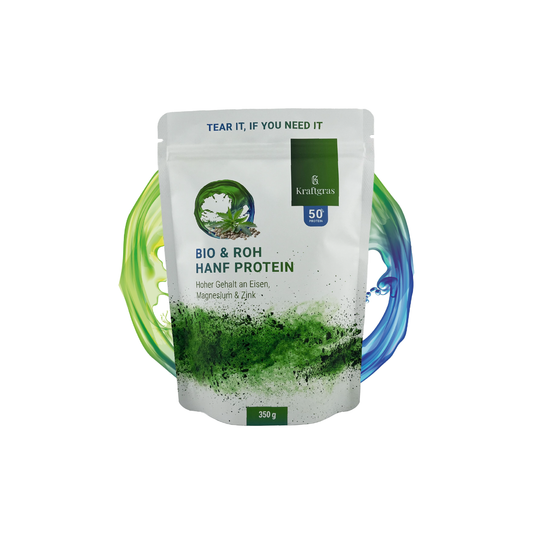

Pumpkin seed protein if you want a higher protein content and are looking for a powder with a subtle taste. Hemp protein if fiber is important to you and you like a stronger, nutty-green taste. Many people alternate between the two – the price is the same for both.
The kernels or seeds are mechanically pressed to extract the oil. The press cake that remains is ground – that is the powder. Some of the fat remains in it, as do the minerals and fiber from the seeds. In contrast, with an isolate, the protein is technically extracted, and everything else is separated.
It is a foodstuff, not a metered preparation. Two to three tablespoons daily are common, which is about 20 to 30 grams. A can therefore lasts about two weeks.
For hemp protein, the manufacturer recommends a maximum of 10 grams per day for children under nine years of age. For pumpkin seed protein, there is no separate restriction. If in doubt, please discuss consumption with your pediatrician.
Pumpkin seeds and hemp seeds are naturally gluten-free. With the hemp protein, however, the manufacturer points out that traces of gluten may be present because gluten-containing raw materials are processed in the same facility. If you suffer from celiac disease, please contact us before your first purchase – or choose pumpkin seed protein if in doubt.
Only the seeds of the useful hemp plant are used, not the flowers or leaves. The powder is a foodstuff and not a cannabinoid product. If you have any questions, please contact us.
Pumpkin seed protein tastes mild and delicately nutty and remains subtly in the background in recipes. Hemp protein is stronger, nuttier, and has a slightly green, herbaceous note. Those trying plant-based protein for the first time usually start with pumpkin seed.
From controlled organic cultivation in Austria, processed in an Austrian organic facility. The powders are bottled in Switzerland. Kraftgras is located in St. Gallen.
Store in a dark, dry, and cool place. After opening, store in a dry and tightly sealed container and use up quickly. The best-before date is on the can.